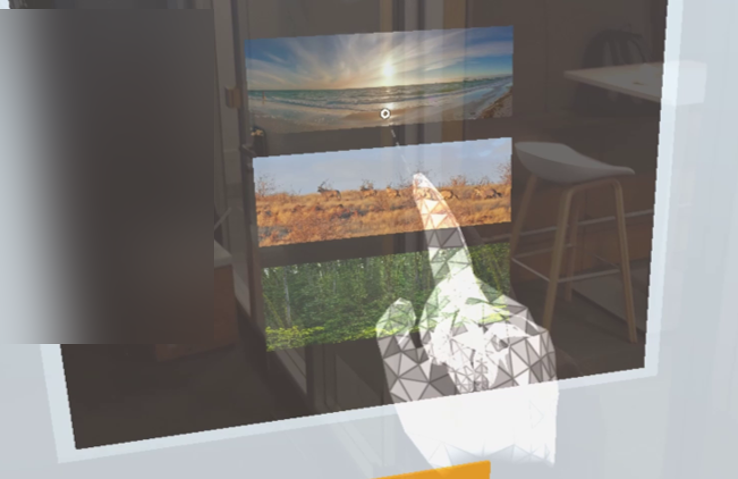
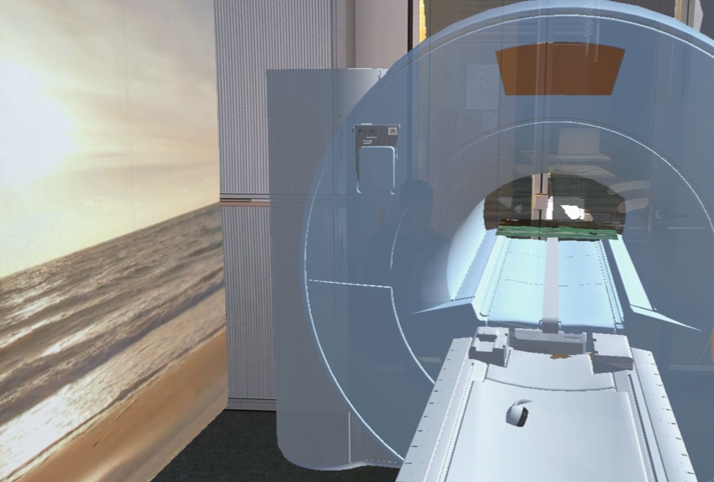
At Siemens Healthineers I led the design and testing of an AR setup — with the goal of evaluating how UX testing in augmented reality can add value compared to traditional UX tests. The AR system allowed patients to personalize audio, video and room settings — creating a calming atmosphere before the MRI examination.
AR testing improved the tangibility and look-and-feel of potential future innovations and delivered UX data comparable to traditional UX testing. Additional potential was identified for staff training and for playfully familiarizing children with the MRI procedure.
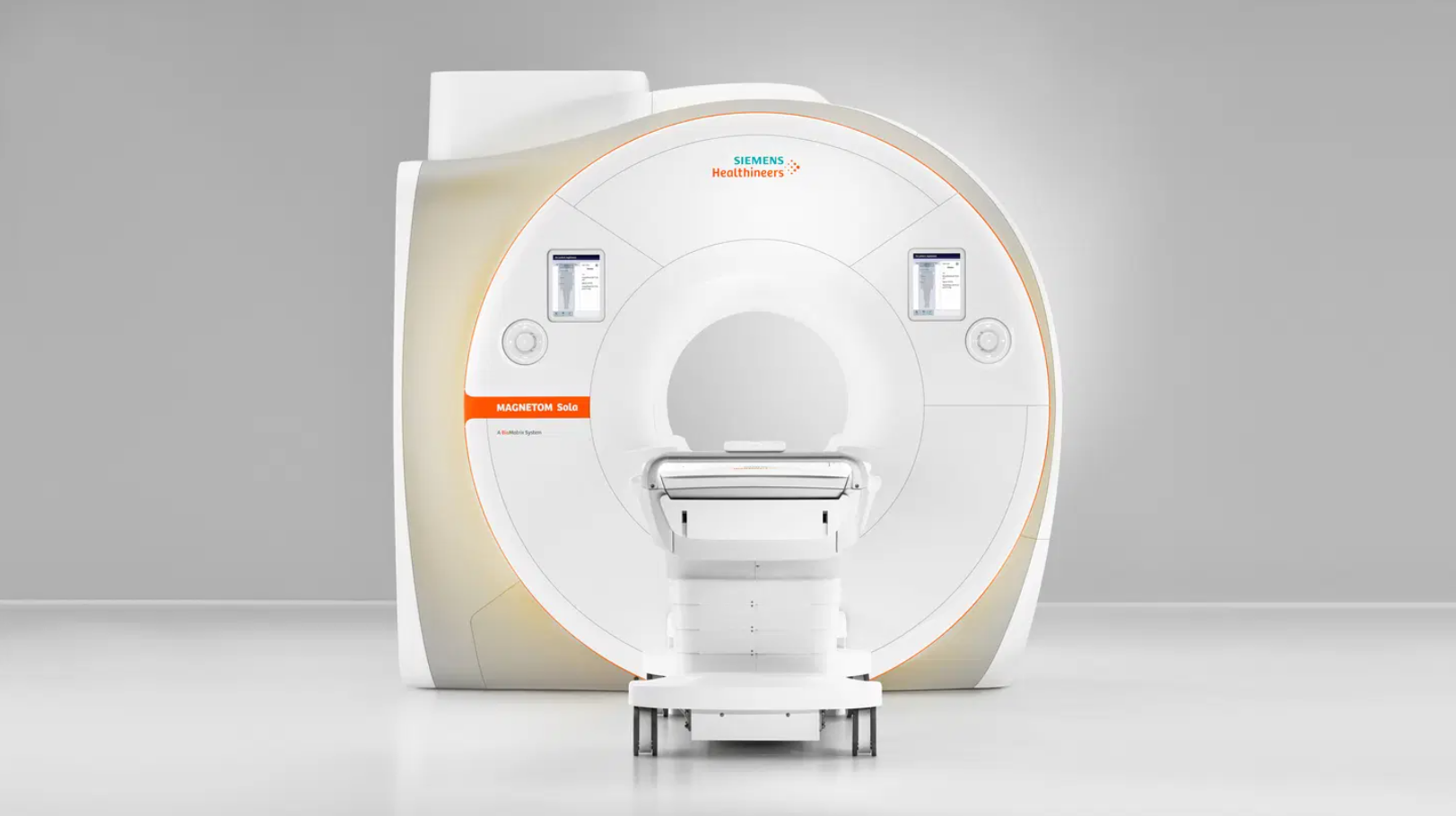
The goal of the project at Siemens Healthineers was to explore the use of augmented reality (AR) for UX testing and UX research. The concept let patients choose their own audio, video or room settings — creating a personalized, calming experience. The selection activated automatically upon entering the MRI room — without intervention by medical staff.
The AR setup was meant to communicate innovative ideas for an improved patient experience during MRI examinations, make these ideas more tangible than purely verbal explanations — and gather UX data to measure their effectiveness.
The project followed a structured UX testing process — a combination of hands-on AR development and classic qualitative research methods. Every step was designed to deliver data comparable to traditional UX research while making the additional value of AR visible.
"AR made the concept tangible — in a way that traditional presentations simply cannot."
— Insight from the clinical sessions
AR testing was perceived as an effective and innovative method for gathering user feedback. Participants valued the direct interaction with the concept — which made the experience more tangible than traditional presentations.
The AR setup showed potential to streamline clinical workflows while increasing quality of care — especially for pediatric patients. Compared to traditional UX research, this approach delivered the same quality of insights — plus additional findings only AR can enable.
The AR setup helped reduce anxiety and nervousness in patients — particularly children — by making the MRI experience more playful and tangible. Especially relevant: children are sedated in almost half of all MRI cases.
The AR experience playfully familiarized children with the MRI procedure — reducing stress for children, parents and operators alike.
Operators found the patient-experience system valuable. It has the potential to reduce communication time with patients through the UI in the changing room — and opens new possibilities for handling anxious or uncertain individuals.
Several operators noted that children in particular would more willingly undergo an MRI with this concept — noticeably improving the overall experience.